Educational content only. Not personalised medical advice. Clinical decisions remain the responsibility of the treating clinician.
Low-vision rehabilitation
Low-vision rehabilitation aims to optimise the use of residual vision after severe, permanent vision loss, teach skills for daily life, and help people adapt and stay socially engaged [S7]. Rehabilitation services improve clinical and functional ability, but effects on quality of life are small or uncertain [S1] [S7]. Evidence from low- and middle-income countries is scarce, although optical devices appear to help in sub-Saharan Africa [S8] [S11].
Key points - A Cochrane review of 44 RCTs found no evidence of benefit on health-related quality of life, but a small benefit on vision-related quality of life from methods of enhancing vision (moderate certainty) [S7]. - Stand-mounted electronic magnifiers (CCTV) may give faster reading than optical magnifiers (low certainty); there is no good evidence for filters or prism spectacles [S5]. - Depression is common and treatable: integrating behaviour activation with rehabilitation halved new depressive disorders in AMD (12.6% vs 23.4%) [S2]. - Gains can fade: in VA LOVIT II, visual reading ability declined between 4 months and 1 year [S6]. - In sub-Saharan Africa, only three studies were found; all reported better acuity and reading with optical devices [S11].
Evidence last checked: 2026-10-17 (PubMed abstracts).
Red flags
- Treatable cause not yet excluded. Cochrane trials enrolled adults with irreversible visual impairment [S7]. A person with recent or unexplained vision loss needs a diagnostic eye examination before rehabilitation [EIC expert opinion].
- Depression or withdrawal. Service providers should be trained to recognise depression and anxiety and have referral pathways to mental health services [S8].
- Further loss of near vision. Loss of near acuity predicted loss of reading ability over a year [S6].
Recognise it: who needs rehabilitation
- Mainly older adults, often with age-related macular degeneration, in high-income settings [S7] [S10].
- Children: no RCTs of optical reading aids for children met Cochrane criteria [S3]; in sub-Saharan Africa many students enrolled in schools for the blind retained functional vision [S11].
- Almost no useful outcome data exist for children and people of working age [S1].
Confirm it: assessment
- Trials measured reading speed, critical print size, near activities and vision-related quality of life [S4] [S5] [S7].
- One-year follow-up is recommended for patients with macular disease to detect functional change and modify the plan [S6].
Manage it
Before acting on this section, check the national and local guidelines, product information and regulatory approvals that apply where you practise. See the medical disclaimer.
Tier A (primary care / no specialist)
- Identify people with permanent vision loss who struggle with daily tasks and link them to rehabilitation or community services [S1].
- Visual rehabilitation that has been shown to work can be delivered by non-specialists [S8].
- Screen for low mood and refer to mental health services where available [S8].
Tier B (general eye clinic)
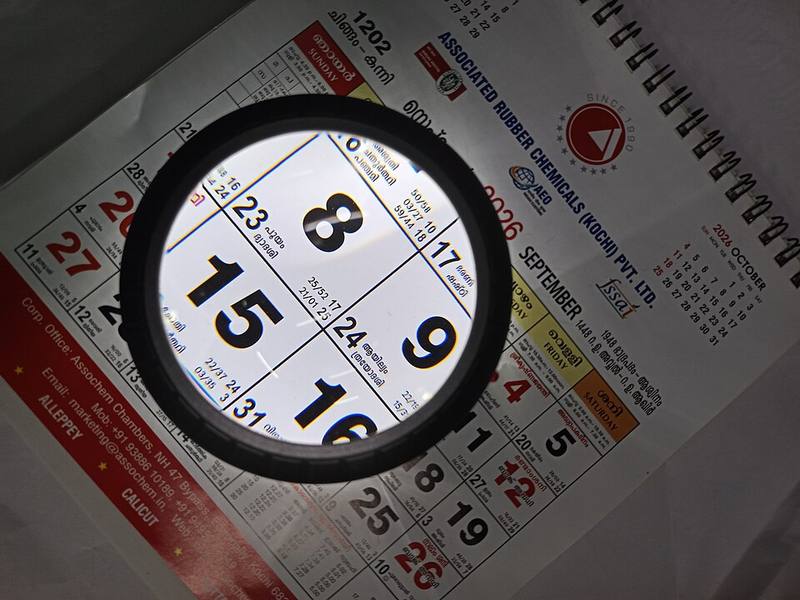
- Optical devices first. Stand and hand magnifiers are the comparator in most trials [S5]; in sub-Saharan Africa, optical devices improved distance and near acuity, reading speed and errors [S11].
- Add electronic magnifiers where affordable. Portable electronic magnifiers (p-EVES) added to optical aids allowed smaller print, longer reading and more independent tasks; 70% preferred them for leisure reading, although optical aids were used for more tasks [S4].
- Avoid unproven aids. Coloured filters and prism spectacles are not supported [S5].
- Review at 1 year [S6].
Tier C (specialist centre)
- Multidisciplinary rehabilitation. One low-risk-of-bias trial of intensive rehabilitation showed a very large effect on vision-related quality of life versus inactive control; a second showed a small, uncertain effect [S7]. Against active controls, no additional benefit was found [S7].
- Mental health integration. Behaviour activation with rehabilitation reduced depressive disorders (adjusted RR 0.51) [S2]; psychological or group programmes gave a small benefit on depression versus usual care (moderate certainty) [S7].
- Self-management programmes. Little or no effect on quality of life (low certainty) [S10].
- Telerehabilitation. Only one small, high-risk-of-bias trial was found; outcomes were similar to self-guided training [S9].
Refer when
| Situation | Urgency |
|---|---|
| New or unexplained loss of vision | Urgent, for diagnosis before rehabilitation; timing per your local service or specialist advice |
| Signs of depression or suicidal thoughts in a person with vision loss | Urgent mental health referral [S8] |
| Permanent vision loss limiting reading, mobility or work | Routine, to low-vision services [S1]; timing per your local service or specialist advice |
Pitfalls
- Promising better quality of life: overall effects are small [S7].
- Dispensing devices without follow-up: reading benefits decline over a year [S6].
- Ignoring depression [S2] [S8].
- Paying for expensive technology without evidence of added benefit for the person [S5].
Evidence notes
| Source | Date | Design |
|---|---|---|
| [S1] | 2012 | Systematic review, 58 studies (7 RCTs) |
| [S2] | 2014 | Single-masked RCT, 188 patients with AMD |
| [S3] | 2015 | Cochrane review, no eligible studies (children) |
| [S4] | 2017 | Randomised crossover trial, 100 participants, UK |
| [S5] | 2018 | Cochrane review, 13 studies (reading aids) |
| [S6] | 2019 | Follow-up of a multicentre RCT, 255 veterans |
| [S7] | 2020 | Cochrane review, 44 RCTs |
| [S8] | 2022 | Systematic review, 15 controlled studies in LMICs |
| [S9] | 2023 | Cochrane review, 1 trial (telerehabilitation) |
| [S10] | 2025 | Cochrane review, 20 RCTs (self-management) |
| [S11] | 2026 | Systematic review, 3 studies, sub-Saharan Africa |
- Most evidence comes from high-income countries and older adults with AMD [S7] [S10]; only four LMIC studies had low risk of bias [S8].
- Follow-up was mostly 6 months or less [S7].
- No cost-effectiveness data were reported in the 2012 review [S1].
- A 2021 meta-analysis in the search results was flagged as retracted and was excluded.
- Not covered by these sources: orientation and mobility training outcomes, braille, and specific magnifier prescribing methods.
Related articles
References
See the numbered source list below. Each marker [S#] links to its PubMed and DOI record.
Sources
- [S1] Binns AM, Bunce C, Dickinson C, Harper R, Tudor-Edwards R, Woodhouse M, et al. How effective is low vision service provision? A systematic review. Survey of ophthalmology. (2012). PubMed 22018676 · doi:10.1016/j.survophthal.2011.06.006
- [S2] Rovner BW, Casten RJ, Hegel MT, Massof RW, Leiby BE, Ho AC, et al. Low vision depression prevention trial in age-related macular degeneration: a randomized clinical trial. Ophthalmology. (2014). PubMed 25016366 · doi:10.1016/j.ophtha.2014.05.002
- [S3] Barker L, Thomas R, Rubin G, Dahlmann-Noor A Optical reading aids for children and young people with low vision. The Cochrane database of systematic reviews. (2015). PubMed 25738963 · doi:10.1002/14651858.cd010987.pub2
- [S4] Taylor JJ, Bambrick R, Brand A, Bray N, Dutton M, Harper RA, et al. Effectiveness of portable electronic and optical magnifiers for near vision activities in low vision: a randomised crossover trial. Ophthalmic & physiological optics : the journal of the British College of Ophthalmic Opticians (Optometrists). (2017). PubMed 28497480 · doi:10.1111/opo.12379
- [S5] Virgili G, Acosta R, Bentley SA, Giacomelli G, Allcock C, Evans JR Reading aids for adults with low vision. The Cochrane database of systematic reviews. (2018). PubMed 29664159 · doi:10.1002/14651858.cd003303.pub4
- [S6] Stelmack JA, Tang C, Wei Y, Rose K, Ballinger R, Whitman O, et al. Veterans Affairs Low-vision Intervention Trial II: One-year Follow-up. Optometry and vision science : official publication of the American Academy of Optometry. (2019). PubMed 31592954 · doi:10.1097/opx.0000000000001428
- [S7] van Nispen RM, Virgili G, Hoeben M, Langelaan M, Klevering J, Keunen JE, et al. Low vision rehabilitation for better quality of life in visually impaired adults. The Cochrane database of systematic reviews. (2020). PubMed 31985055 · doi:10.1002/14651858.cd006543.pub2
- [S8] Wallace S, Alao R, Kuper H, Jackson ML Multidisciplinary visual rehabilitation in low- and middle-income countries: a systematic review. Disability and rehabilitation. (2022). PubMed 32726142 · doi:10.1080/09638288.2020.1794063
- [S9] Bittner AK, Yoshinaga PD, Rittiphairoj T, Li T Telerehabilitation for people with low vision. The Cochrane database of systematic reviews. (2023). PubMed 36637057 · doi:10.1002/14651858.cd011019.pub4
- [S10] Malkin A, Deemer A, Contreras M, Edmonds H, Quan AC, Koskey J, et al. Self-management interventions for quality of life in adults with visual impairment. The Cochrane database of systematic reviews. (2025). PubMed 39927516 · doi:10.1002/14651858.cd015790.pub2
- [S11] Akuffo KO, Agyekum S, Kyeremeh S, Andoh AKA, Osei Duah Junior I, Boateng JA, et al. Effectiveness of low vision rehabilitation on visual function and quality of life in Sub-Saharan Africa: a systematic review. Frontiers in rehabilitation sciences. (2026). PubMed 42718717 · doi:10.3389/fresc.2026.1878737