Educational content only. Not personalised medical advice. Clinical decisions remain the responsibility of the treating clinician.
Retinoblastoma
Retinoblastoma is the most common intraocular malignancy of childhood [S9]. Outcomes depend heavily on where a child lives: survival and globe salvage correlate with national income level, and delayed presentation with advanced disease is common in low- and middle-income countries (LMICs) [S6] [S9].
Key points - Early detection matters: prolonged time to diagnosis is associated with more extraocular disease and higher mortality [S2]. - The red reflex is the most widely used screening technique, and universal newborn eye screening is recommended by one systematic review [S5]. - Enucleation is curative for intraocular disease; treatment intensity should match the resources available [S1]. - Globe-salvage options (systemic chemotherapy with focal consolidation, intra-arterial and intravitreal chemotherapy) are limited in LMICs by availability and cost [S9]. - Children with heritable retinoblastoma carry a markedly increased lifelong risk of second primary cancers [S8].
Evidence last checked: 2026-10-17 (PubMed abstracts).
Red flags
- Delay in diagnosis. In Latin America the median time from first symptom to diagnosis ranged from 3 to 5 months, and prolonged delay was associated with more extraocular disease and mortality [S2].
- Late, extraocular disease. In developing countries retinoblastoma is often diagnosed after it has spread beyond the eye [S1].
- Heritable disease. Approximately 45% of patients with retinoblastoma carry a germline RB1 pathogenic variant and are at risk of pineal trilateral retinoblastoma [S3].
- Abandonment of treatment. Poor treatment compliance is a major obstacle to cure in developing countries [S1].
Recognise it
- An altered red reflex is the basis of most screening devices and mobile phone applications now used in community screening [S5].
- Median age at diagnosis in Latin American series ranged from 16.5 to 22.2 months [S2].
- Survival gaps are largest in sub-Saharan Africa and southeast and southwest Asia [S6].
Confirm it
- Staging and treatment recommendations for unilateral and bilateral disease in developing countries are set out in the SIOP-PODC guideline, which uses a classification based on locally available resources [S1].
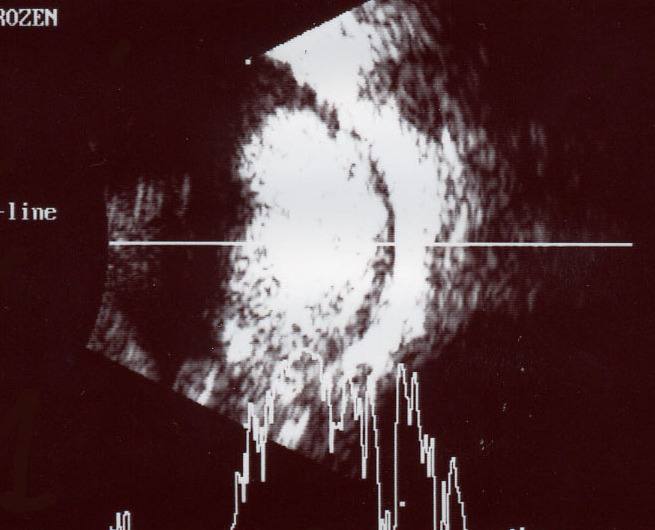
- Examination under anaesthesia and ultrasonography were used to assess eyes at diagnosis and after chemotherapy in an Indian RCT [S7].
- Pineal trilateral retinoblastoma: of 22 asymptomatic patients, 21 (95%) were diagnosed before 40 months of age, with a lead time of about 1 year from asymptomatic to symptomatic disease [S3]. Six-monthly MRI from diagnosis of heritable disease until 36 months of age would need at least 311 scans to detect one asymptomatic case (low-level GRADE evidence) [S3].
Manage it
Before acting on this section, check the national and local guidelines, product information and regulatory approvals that apply where you practise. See the medical disclaimer.
Tier A (primary care / no specialist)
- Check the red reflex in newborns and infants; red reflex testing is the most widely employed screening technique [S5].
- Health-worker training and public awareness campaigns in LMICs have been followed by less extraocular spread and less treatment refusal or abandonment in pre-post studies, though all were at serious risk of bias [S4].
- Counsel families early about the importance of completing treatment [S1].
Tier B (general eye clinic)
- Confirm suspicion and refer to a centre that treats retinoblastoma (see Refer when).
- Enucleation is curative for intraocular disease, which matters where globe-salvage services are out of reach [S1].
Tier C (specialist centre)
- Graduated intensity. SIOP-PODC recommendations adapt staging and treatment to available resources and address counselling of families for whom compliance is an issue [S1].
- Conservative treatment of advanced intraocular disease. Systemic chemotherapy with focal consolidation, intra-arterial chemotherapy (IAC) and intravitreal chemotherapy allow globe salvage, but cost, long treatment duration, repeated examinations under anaesthesia, side effects and the risk of failure must be discussed with parents [S9]. External beam radiotherapy remains useful for recalcitrant disease despite the risk of second cancers in germline carriers [S9].
- IAC versus intravenous chemotherapy (IVC). A 2026 Cochrane review found that IAC probably increases overall globe salvage compared with IVC (HR 2.01; 1 RCT, 143 eyes; moderate certainty), with probably little or no difference in overall survival [S12]. Adding IVC to IAC may make little or no difference to globe salvage (low certainty, non-randomised studies) [S12].
- Higher-dose carboplatin. In a single-centre RCT of 32 group D and E eyes in India, higher-dose carboplatin-based IVC did not improve globe or vision salvage over standard dosing [S7]. Doses as reported in [S7]: standard versus higher dose carboplatin of 18.6 vs 28 mg/kg (under 36 months) or 560 vs 840 mg/m² (36 months and older), with vincristine and etoposide.
- Intravitreal chemotherapy. A single-arm meta-analysis of 1082 eyes reported an overall enucleation rate of 24.70% [S11]. Pigmentary retinopathy occurred in 36.56% of eyes with melphalan versus 2.42% with topotecan; nearly all studies had serious risk of bias [S11].
- Adjuvant chemotherapy after enucleation. In an RCT of 187 children with unilateral retinoblastoma and high-risk pathology, 3 cycles of CEV (carboplatin, etoposide, vincristine) gave 5-year disease-free survival of 90.4% versus 89.2% with 6 cycles, meeting non-inferiority, with fewer adverse events and lower cost [S10].
- Survivorship. Hereditary retinoblastoma carries a pooled standardised incidence ratio for second primary cancers of 17.55, versus 1.36 (not significant) for non-hereditary disease; chemotherapy and radiotherapy were associated with increased risk in hereditary patients [S8].
Refer when
| Situation | Urgency |
|---|---|
| Child with an abnormal or absent red reflex | Urgent to an ocular oncology or paediatric eye service; timing per your local service or specialist advice [EIC expert opinion] |
| Suspected retinoblastoma with orbital swelling or proptosis (possible extraocular disease) | Immediate, same-day [EIC expert opinion] |
| Survivor of heritable retinoblastoma with a new lump or symptom | Urgent, oncology review; timing per your local service or specialist advice |
Pitfalls
- Assuming a delay of a few months is harmless: prolonged time to diagnosis is associated with worse outcomes [S2].
- Offering prolonged globe-salvage treatment without discussing cost, duration and failure risk with parents [S9].
- Treating hereditary and non-hereditary survivors alike: second cancer risk differs greatly [S8].
- Over-reading the IAC evidence: only one RCT compared IAC with IVC [S12].
Evidence notes
| Source | Date | Design |
|---|---|---|
| [S1] | 2013 | SIOP-PODC consensus guideline for developing countries |
| [S3] | 2020 | Meta-analysis of observational studies |
| [S4] | 2020 | Systematic review of LMIC early-detection interventions |
| [S5] | 2021 | Systematic review of screening strategies |
| [S5] | 2021 | EURbG position paper |
| [S6] | 2022 | Global systematic review and meta-analysis |
| [S7] | 2023 | Single-centre RCT, 32 eyes |
| [S8] | 2024 | Systematic review and meta-analysis, 10 studies |
| [S9] | 2024 | ICMR consensus guideline (India) |
| [S10] | 2024 | Two-centre non-inferiority RCT, 187 children |
| [S11] | 2025 | Single-arm meta-analysis, 1082 eyes |
| [S12] | 2026 | Cochrane systematic review |
- Most comparative evidence on chemotherapy routes is non-randomised and at high risk of bias [S11] [S12].
- The small dose RCT [S7] was underpowered to exclude a difference.
- The adjuvant chemotherapy RCT was done in China and applies to unilateral enucleated eyes with high-risk pathology [S10].
- Funding: [S6] was funded by the Health and Medical Research Fund (Hong Kong) and Children Cancer's Foundation (Hong Kong).
- Not covered by these sources: clinical signs other than the red reflex, criteria for secondary enucleation, the details of the International Intraocular Retinoblastoma Classification, genetic testing pathways, chemotherapy dosing outside [S7], and evidence-based referral timings.
Related articles
References
See the numbered source list below. Each marker [S#] links to its PubMed and DOI record.
Sources
- [S1] Chantada G, Luna-Fineman S, Sitorus RS, Kruger M, Israels T, Leal-Leal C, et al. SIOP-PODC recommendations for graduated-intensity treatment of retinoblastoma in developing countries. Pediatric blood & cancer. (2013). PubMed 23335388 · doi:10.1002/pbc.24468
- [S2] Mattosinho CCS, Moura ATMS, Oigman G, Ferman SE, Grigorovski N Time to diagnosis of retinoblastoma in Latin America: A systematic review. Pediatric hematology and oncology. (2019). PubMed 31014139 · doi:10.1080/08880018.2019.1605432
- [S3] de Jong MC, Kors WA, Moll AC, de Graaf P, Castelijns JA, Jansen RW, et al. Screening for Pineal Trilateral Retinoblastoma Revisited: A Meta-analysis. Ophthalmology. (2020). PubMed 32061409 · doi:10.1016/j.ophtha.2019.10.040
- [S4] Zabih W, Thota AB, Mbah G, Freccero P, Gupta S, Denburg AE Interventions to improve early detection of childhood cancer in low- and middle-income countries: A systematic review. Pediatric blood & cancer. (2020). PubMed 33037867 · doi:10.1002/pbc.28761
- [S5] Vempuluru VS, Kaliki S Screening for Retinoblastoma: A Systematic Review of Current Strategies. Asia-Pacific journal of ophthalmology (Philadelphia, Pa.). (2021). PubMed 33793441 · doi:10.1097/apo.0000000000000378
- [S6] Wong ES, Choy RW, Zhang Y, Chu WK, Chen LJ, Pang CP, et al. Global retinoblastoma survival and globe preservation: a systematic review and meta-analysis of associations with socioeconomic and health-care factors. The Lancet. Global health. (2022). PubMed 35093202 · doi:10.1016/s2214-109x(21)00555-6
- [S7] Roy PS, Muhammed S, Singh U, Gowravajhala S, Jain R, Trehan A, et al. A single-blinded, randomized controlled trial of standard versus higher dose carboplatin-based intravenous chemotherapy for group D and E retinoblastoma. Pediatric blood & cancer. (2023). PubMed 37243382 · doi:10.1002/pbc.30444
- [S8] Sun J, Gu X, Wang L Incidence of second primary cancers in patients with retinoblastoma: a systematic review and meta-analysis. Frontiers in oncology. (2024). PubMed 38606112 · doi:10.3389/fonc.2024.1372548
- [S9] Meel R, Kulkarni S, Singh L, Chinnaswamy G, Radhakrishnan V, Madan R, et al. Management of Intraocular Retinoblastoma: ICMR Consensus Guidelines. Indian journal of pediatrics. (2024). PubMed 38609685 · doi:10.1007/s12098-024-05095-0
- [S10] Ye H, Xue K, Zhang P, Chen R, Zhai X, Ling L, et al. Three vs 6 Cycles of Chemotherapy for High-Risk Retinoblastoma: A Randomized Clinical Trial. JAMA. (2024). PubMed 39432296 · doi:10.1001/jama.2024.19981
- [S11] Bravo-Gonzalez A, Dominguez-Ruiz P, González M, Hira S, Avilés-Covarrubias C, Souza-Filho CEME, et al. The Role of Intravitreal Chemotherapy as an Adjunctive Treatment for Retinoblastoma: A Systematic Review and Single-Arm Meta-Analysis. American journal of ophthalmology. (2025). PubMed 39701510 · doi:10.1016/j.ajo.2024.12.012
- [S12] Rokohl AC, Lohmann N, Reinking N, Skoetz N, Heindl LM Intravenous chemotherapy versus intra-arterial chemotherapy for retinoblastoma. The Cochrane database of systematic reviews. (2026). PubMed 41700592 · doi:10.1002/14651858.cd013695.pub2