Educational content only. Not personalised medical advice. Clinical decisions remain the responsibility of the treating clinician.
Retinal Gene Therapy, CRISPR and Mutation-Agnostic Treatments
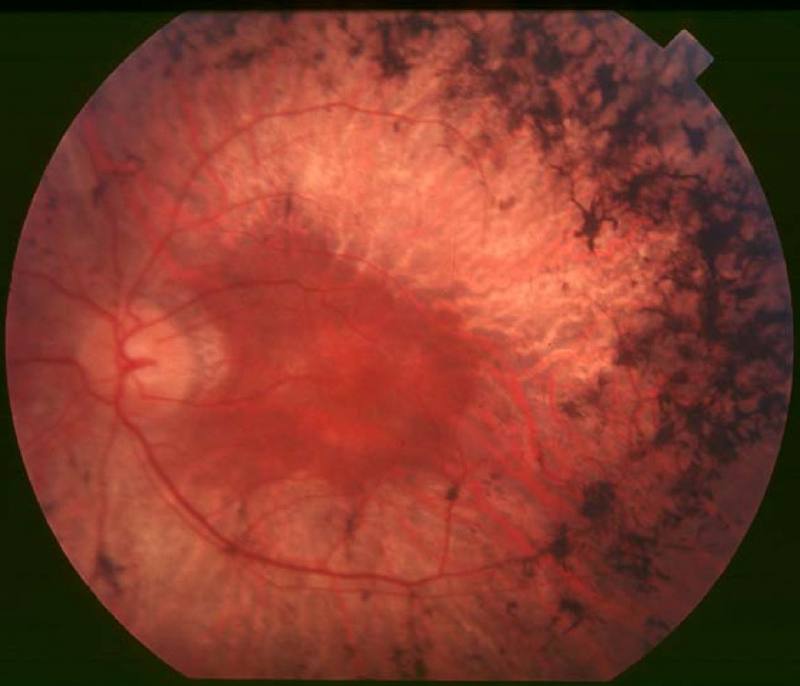
Inherited retinal diseases (IRDs) are caused by variants in more than 280 genes [S12]. Gene replacement works for one of them, biallelic RPE65 disease, with voretigene neparvovec [S1] [S12]. Gene editing (CRISPR), RNA therapies (antisense oligonucleotides) and mutation-agnostic approaches such as neuroprotection and optogenetics are in trials [S8] [S9] [S12] [S13].
Resource tiers: this is a specialist research topic outside the Tier A / Tier B / Tier C low-resource focus of this library, so no resource tiers are defined here.
Red flags
- No genetic diagnosis, no gene-specific therapy. Voretigene neparvovec trial entry required confirmed biallelic RPE65 mutations [S1].
- Many phase 3 trials have missed their primary endpoints. The choroideremia phase 3 trial [S7] and the XIRIUS X-linked RP trial [S6] did not meet their primary endpoints.
- Surgery carries risk. Across AAV gene therapy studies, the cumulative incidence of at least one serious adverse event was 8%, often linked to the surgical procedure [S4].
- Antisense treatment can cause cataract. In the sepofarsen trial, 8 of 11 patients developed cataract [S9].
Recognise it
| Approach | What it does | Example and stage |
|---|---|---|
| Gene augmentation (AAV) | Adds a working copy of the gene | Voretigene neparvovec for RPE65 [S1] [S12]; RPGR [S6] and choroideremia [S7] trials |
| Gene editing (CRISPR-Cas9) | Edits the faulty DNA | EDIT-101 for one CEP290 variant, phase 1/2 [S8] |
| Antisense oligonucleotides (ASOs) | Modify RNA splicing or expression, by intravitreal injection | Sepofarsen for CEP290 LCA10, phase 1b/2 [S9]; review [S10] |
| Mutation-agnostic neuroprotection | Neurotrophic factors that slow photoreceptor loss whatever the gene | CNTF cell-based therapy approved for macular telangiectasia type 2 [S12] |
| Mutation-agnostic optogenetics | Makes surviving retinal cells light-sensitive | ChrimsonR phase 1 in advanced RP [S13] |
Of 101 IRD gene therapy trials registered up to the end of 2022, phase 1/2 was the most common phase (46 trials), and one led to an FDA-approved treatment [S5].
Confirm it
- A molecular (genetic) diagnosis is required for gene-specific therapy [S1] [S8].
- Enough viable retina: required for voretigene neparvovec [S1]; more preserved retinal area may improve choroideremia trial outcomes [S7].
Manage it
Before acting on this section, check the national and local guidelines, product information and regulatory approvals that apply where you practise. See the medical disclaimer.
Specialist management (IRD centres and trials)
- Voretigene neparvovec (RPE65). In the phase 3 RCT (2017), 31 people were randomised to bilateral subretinal injection or control [S1]. Gains in functional vision and light sensitivity were maintained at 3 to 4 years, while visual acuity changed little [S2]. A meta-analysis (2021) of RPE65 studies found significant improvement in full-field light sensitivity and only modest changes in acuity [S3].
- Other gene augmentation. XIRIUS (2024, RPGR) missed its primary microperimetry endpoint; the low dose improved some secondary outcomes [S6]. The choroideremia phase 3 trial (2023) did not meet its primary acuity endpoint [S7].
- CRISPR gene editing. EDIT-101 (2024) was given to 14 participants; there were no treatment-related serious adverse events, and 6 had a meaningful improvement in cone-mediated vision [S8]. Delivery of larger editing systems is a key challenge [S11].
- Antisense oligonucleotides. Sepofarsen (2022) showed post hoc improvements in acuity and retinal sensitivity; the lower dose had the better benefit-risk profile [S9]. ASO challenges include off-target effects, delivery and long-term safety [S10].
- Mutation-agnostic approaches. Neuroprotection and complement modulation target shared disease mechanisms [S12]. Optogenetics is for late-stage disease after photoreceptor loss; see the optogenetics article [S13].
Refer when
| Situation | Urgency |
|---|---|
| Suspected IRD (night blindness, field loss, family history) | Routine referral, to an IRD or genetics service; timing per your local service or specialist advice |
| Pain, redness or vision loss after gene therapy surgery or injection | Immediate, same-day, to the treating centre [G1] |
Pitfalls
- Promising treatment before genetic testing [S1].
- Equating light-sensitivity gains with better acuity [S2] [S3].
- Assuming a phase 1/2 signal will hold in phase 3 [S6] [S7].
- Underestimating surgical risk [S4].
Evidence notes
| Source | Date | Design |
|---|---|---|
| [S1] | 2017 | Phase 3 open-label RCT |
| [S2] | 2021 | Phase 3 follow-up, 3 to 4 years |
| [S3] | 2021 | Systematic review and meta-analysis (RPE65 only) |
| [S4] | 2023 | Systematic review and meta-analysis of AAV safety |
| [S5] | 2025 | Registry review of trials |
| [S6] | 2024 | Phase 2/3 RCT, underpowered (29 participants) [S6] |
| [S7] | 2023 | Phase 3 RCT |
| [S8] | 2024 | Phase 1/2, open-label |
| [S9] | 2022 | Phase 1b/2, open-label |
| [S10] | 2025 | Narrative review |
| [S11] | 2025 | Narrative review |
| [S12] | 2026 | Narrative review |
| [S13] | 2026 | Phase 1, open-label |
- Only one randomised trial supports the approved therapy, and it was open-label [S1] [S3].
- Not covered by these sources: base and prime editing in humans, trial results after 2024, and approval status by country.
Related articles
References
See the numbered source list below. Each marker [S#] links to its PubMed and DOI record.
Sources
- [S1] Russell S, Bennett J, Wellman JA, Chung DC, Yu ZF, Tillman A, et al. Efficacy and safety of voretigene neparvovec (AAV2-hRPE65v2) in patients with RPE65-mediated inherited retinal dystrophy: a randomised, controlled, open-label, phase 3 trial. Lancet (London, England). (2017). PubMed 28712537 · doi:10.1016/s0140-6736(17)31868-8
- [S2] Maguire AM, Russell S, Chung DC, Yu ZF, Tillman A, Drack AV, et al. Durability of Voretigene Neparvovec for Biallelic RPE65-Mediated Inherited Retinal Disease: Phase 3 Results at 3 and 4 Years. Ophthalmology. (2021). PubMed 33798654 · doi:10.1016/j.ophtha.2021.03.031
- [S3] Tuohy GP, Megaw R A Systematic Review and Meta-Analyses of Interventional Clinical Trial Studies for Gene Therapies for the Inherited Retinal Degenerations (IRDs). Biomolecules. (2021). PubMed 34069580 · doi:10.3390/biom11050760
- [S4] Sobh M, Lagali PS, Ghiasi M, Montroy J, Dollin M, Hurley B, et al. Safety and Efficacy of Adeno-Associated Viral Gene Therapy in Patients With Retinal Degeneration: A Systematic Review and Meta-Analysis. Translational vision science & technology. (2023). PubMed 37982768 · doi:10.1167/tvst.12.11.24
- [S5] Ameri H, Kesavamoorthy N, Bruce DN Frequency and Pattern of Gene Therapy Clinical Trials for Inherited Retinal Diseases. Advances in experimental medicine and biology. (2025). PubMed 39930178 · doi:10.1007/978-3-031-76550-6_15
- [S6] Lam BL, Pennesi ME, Kay CN, Panda S, Gow JA, Zhao G, et al. Assessment of Visual Function with Cotoretigene Toliparvovec in X-Linked Retinitis Pigmentosa in the Randomized XIRIUS Phase 2/3 Study. Ophthalmology. (2024). PubMed 38423215 · doi:10.1016/j.ophtha.2024.02.023
- [S7] MacLaren RE, Fischer MD, Gow JA, Lam BL, Sankila EK, Girach A, et al. Subretinal timrepigene emparvovec in adult men with choroideremia: a randomized phase 3 trial. Nature medicine. (2023). PubMed 37814062 · doi:10.1038/s41591-023-02520-3
- [S8] Pierce EA, Aleman TS, Jayasundera KT, Ashimatey BS, Kim K, Rashid A, et al. Gene Editing for CEP290-Associated Retinal Degeneration. The New England journal of medicine. (2024). PubMed 38709228 · doi:10.1056/nejmoa2309915
- [S9] Russell SR, Drack AV, Cideciyan AV, Jacobson SG, Leroy BP, Van Cauwenbergh C, et al. Intravitreal antisense oligonucleotide sepofarsen in Leber congenital amaurosis type 10: a phase 1b/2 trial. Nature medicine. (2022). PubMed 35379979 · doi:10.1038/s41591-022-01755-w
- [S10] Banadaki HD, Garanto A, Collin RWJ Antisense oligonucleotides for inherited retinal diseases: a comprehensive review. Molecular aspects of medicine. (2025). PubMed 41037980 · doi:10.1016/j.mam.2025.101416
- [S11] Geiger AB, Kennedy JG, Staker LG, Wensel TG, Casson RJ, Thomas PQ Shining light on CRISPR/Cas9 therapeutics for inherited retinal diseases. Progress in retinal and eye research. (2025). PubMed 40482807 · doi:10.1016/j.preteyeres.2025.101376
- [S12] Rowe LW, Becerra SP, MacLaren RE, Avery RL, Wykoff CC, Ho AC, et al. Gene-Agnostic Therapeutic Strategies for Inherited Retinal Diseases: Neuroprotection and Immunomodulation. Genes. (2026). PubMed 42074510 · doi:10.3390/genes17040392
- [S13] Sahel JA, Futterknecht S, Audo I, Martel JN, Ling S, Pagot C, et al. Optogenetic Therapy for Restoring Aspects of Visual Function. The New England journal of medicine. (2026). PubMed 42842903 · doi:10.1056/nejmoa2602215
Guidelines
- [G1] NHS Scotland (Community Eyecare Guidelines, eyes.nhs.scot). 7.4 Endophthalmitis, Post-Operative, (Exogenous Endophthalmitis) (2026). https://www.eyes.nhs.scot/eyecare-guidelines/section-7-uvea/74-endophthalmitis-post-operative-exogenous-endophthalmitis/