Educational content only. Not personalised medical advice. Clinical decisions remain the responsibility of the treating clinician.
Onchocerciasis (river blindness)
Onchocerciasis (river blindness) is caused by the filarial nematode Onchocerca volvulus, transmitted by Simulium blackflies that breed in rivers and streams [S7]. Microfilariae migrate to the skin and eyes, causing skin disease and blindness [S1] [S5]. More than 99% of cases are in sub-Saharan Africa, and WHO has proposed elimination of transmission by 2030 [S11].
Key points - Mass drug administration (MDA) of ivermectin is the main elimination strategy, supplemented by vector control in some countries [S7] [S9]. - Ten or more years of continuous MDA with at least 80% therapeutic coverage was associated with higher odds of eliminating transmission; biannual treatment also helped [S11]. - Only 9% of records from 238 African foci reported elimination of transmission; 61% reported ongoing transmission [S11]. - Where loiasis is co-endemic, ivermectin can cause severe adverse events in people with heavy Loa loa loads [S9]. - Moxidectin gave stronger and longer microfilarial suppression than ivermectin in phase II and III trials [S6].
Evidence last checked: 2026-10-17 (PubMed abstracts).
Red flags: signs that need urgent action
- In a programme: loiasis co-endemicity. Severe adverse events after ivermectin in people with heavy loiasis load can make MDA inappropriate [S9]; in the Democratic Republic of the Congo some treatment projects were stopped in 2005 after serious adverse events [S4].
- In a programme: coverage below 80% or interrupted MDA, which lowers the odds of elimination [S11].
- In a programme: holoendemic baseline, associated with a higher risk of ongoing transmission [S11].
- In a programme: cross-border transmission, weak diagnostics, a small entomology workforce and tired community drug distributors [S7].
- In a child in a high-transmission area: new seizures. Onchocerciasis-associated epilepsy is linked to the child's microfilarial load [S10].
Recognise it: who is at risk
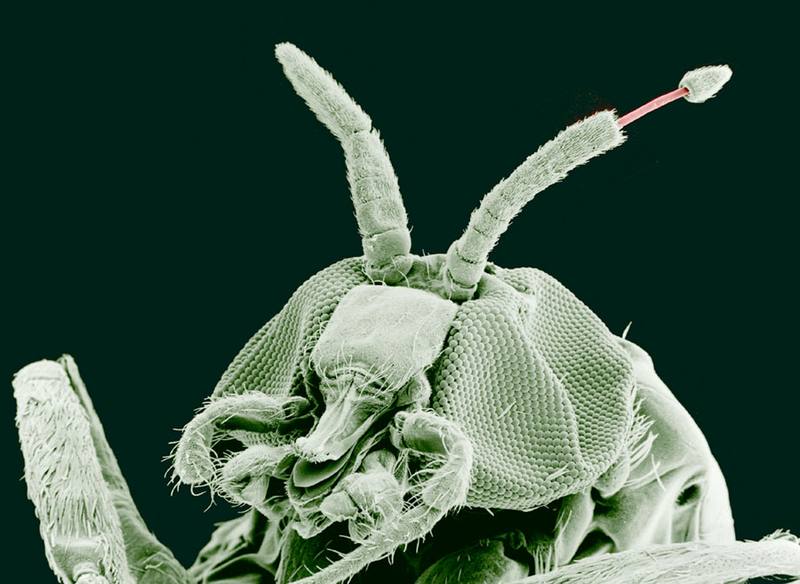
- People living near fast-flowing rivers where blackflies breed [S5].
- Onchocercal skin disease affected 28% of the population across seven endemic African sites; itching and skin disease correlated with endemicity [S5].
- Endemicity can be mapped by sampling 50 adult males per village for onchocercal nodules (Rapid Epidemiological Mapping of Onchocerciasis) [S5].
- In migrants and travellers the disease presents differently and is probably underdiagnosed; one-third have a normal eosinophil count [S3].
Confirm it
- Programme assessments use microfilarial prevalence, nodule prevalence, Ov16 antibody seroprevalence and blackfly infectivity [S11].
- Mapping of hypoendemic areas now relies on serology [S5].
- Tests to verify elimination have different requirements from tests to diagnose individuals [S2].
- In individuals outside endemic areas, newer antibody tests improve specificity but are mostly limited to reference laboratories, and there is no marker of cure [S3].
- Eye examination methods are not covered by these sources.
Manage it: what to do at each resource tier
Before acting on this section, check the national and local guidelines, product information and regulatory approvals that apply where you practise. See the medical disclaimer.
Tier A (community and primary care)
- Support community-directed treatment with ivermectin (CDTI) and keep community drug distributors engaged [S4] [S7].
- Aim for high therapeutic coverage every round; Ghana raised coverage from 58.50% to 83.80% between 1997 and 2016 [S8].
- Refer people with eye symptoms, nodules or troublesome itching from endemic areas, and children with seizures [S5] [S10].
- Follow national programme rules on who may receive ivermectin and on loiasis areas [S9]; dosing is not covered by these sources, so follow local formularies.
Tier B (general eye clinic or district hospital)
- Examine people from endemic areas with eye complaints; onchocerciasis causes blindness through inflammation provoked by parasite death [S1].
- Report suspected serious adverse events after MDA to the programme [S4] [S9].
- Recognise that doxycycline depletes Wolbachia and has macrofilaricidal activity [S1]; a 6-week course may be useful in non-endemic settings alongside ivermectin [S3].
Tier C (national programme and specialist centre)
- Sustain at least 10 years of MDA at ≥80% coverage and consider biannual treatment [S11].
- Consider vector control: community-directed alternatives to riverine insecticides are cheaper, less harmful to the environment and, with MDA, may shorten the time to elimination [S12]. Vector control without vector elimination was associated with ongoing transmission [S11].
- Strengthen entomological capacity [S9] and post-treatment surveillance using elimination diagnostics [S2].
- Moxidectin could use existing CDTI infrastructure if donated; a paediatric indication and use in loiasis co-endemic areas are still needed [S6].
Refer when
| Situation | Urgency |
|---|---|
| Serious reaction after ivermectin (especially in a loiasis area) | Immediate to hospital [EIC expert opinion] |
| Reduced vision or eye inflammation in a person from an endemic area | Urgent to an eye clinic; timing per your local service or specialist advice |
| Child with seizures in an endemic area | Urgent to a clinician who manages epilepsy; timing per your local service or specialist advice |
Pitfalls
- Running MDA in loiasis co-endemic areas without loiasis assessment [S4] [S9].
- Accepting coverage below 80% [S11].
- Assuming annual MDA alone will eliminate transmission everywhere [S9].
- Using eosinophilia to rule out infection in travellers and migrants [S3].
- Stopping MDA without post-treatment surveillance [S2] [S7].
Evidence notes
| Source | Date | Design |
|---|---|---|
| [S1] | 2010 | Narrative review |
| [S2] | 2018 | Narrative review of diagnostics |
| [S3] | 2018 | Narrative review (imported disease) |
| [S4] | 2019 | Programme review, Democratic Republic of the Congo |
| [S5] | 2021 | Narrative review, skin disease mapping |
| [S6] | 2020 | Narrative review with expert opinion (moxidectin) |
| [S7] | 2020 | Narrative review |
| [S8] | 2021 | Programme data review, Ghana |
| [S9] | 2022 | Narrative review (vector control) |
| [S10] | 2023 | Narrative review (epilepsy) |
| [S11] | 2024 | Systematic review and meta-analysis, 238 foci |
| [S12] | 2024 | Narrative review (community vector control) |
- Thin evidence: only one systematic review and meta-analysis [S11]; the rest are narrative or programme reviews, with no randomised trials in the selection.
- Heterogeneity in [S11] was high (I2 83.3%).
- The search returned almost nothing on ocular onchocerciasis itself, so eye signs, grading and ocular treatment are not described here.
- Ghana showed large falls in infection, from 69.13% in 1975 to 0.72% in 2015, but some communities stayed above 1% [S8]; the DRC programme reported poor results [S4].
- Not covered by these sources: ocular signs and their management, ivermectin and moxidectin doses, and current regulatory status of moxidectin by country.
Related articles
References
See the numbered source list below. Each marker [S#] links to its PubMed and DOI record.
Sources
- [S1] Taylor MJ, Hoerauf A, Bockarie M Lymphatic filariasis and onchocerciasis. Lancet (London, England). (2010). PubMed 20739055 · doi:10.1016/s0140-6736(10)60586-7
- [S2] Unnasch TR, Golden A, Cama V, Cantey PT Diagnostics for onchocerciasis in the era of elimination. International health. (2018). PubMed 29471336 · doi:10.1093/inthealth/ihx047
- [S3] Showler AJ, Nutman TB Imported onchocerciasis in migrants and travelers. Current opinion in infectious diseases. (2018). PubMed 30113326 · doi:10.1097/qco.0000000000000483
- [S4] Makenga Bof JC, Ntumba Tshitoka F, Muteba D, Mansiangi P, Coppieters Y Review of the National Program for Onchocerciasis Control in the Democratic Republic of the Congo. Tropical medicine and infectious disease. (2019). PubMed 31200509 · doi:10.3390/tropicalmed4020092
- [S5] Murdoch ME Mapping the burden of onchocercal skin disease. The British journal of dermatology. (2021). PubMed 32302410 · doi:10.1111/bjd.19143
- [S6] Milton P, Hamley JID, Walker M, Basáñez MG Moxidectin: an oral treatment for human onchocerciasis. Expert review of anti-infective therapy. (2020). PubMed 32715787 · doi:10.1080/14787210.2020.1792772
- [S7] Lakwo T, Oguttu D, Ukety T, Post R, Bakajika D Onchocerciasis Elimination: Progress and Challenges. Research and reports in tropical medicine. (2020). PubMed 33117052 · doi:10.2147/rrtm.s224364
- [S8] Biritwum NK, de Souza DK, Asiedu O, Marfo B, Amazigo UV, Gyapong JO Onchocerciasis control in Ghana (1974-2016). Parasites & vectors. (2021). PubMed 33388081 · doi:10.1186/s13071-020-04507-2
- [S9] Tirados I, Thomsen E, Worrall E, Koala L, Melachio TT, Basáñez MG Vector control and entomological capacity for onchocerciasis elimination. Trends in parasitology. (2022). PubMed 35379556 · doi:10.1016/j.pt.2022.03.003
- [S10] Hadermann A, Amaral LJ, Van Cutsem G, Siewe Fodjo JN, Colebunders R Onchocerciasis-associated epilepsy: an update and future perspectives. Trends in parasitology. (2023). PubMed 36528471 · doi:10.1016/j.pt.2022.11.010
- [S11] Mutono N, Basáñez MG, James A, Stolk WA, Makori A, Kimani TN, et al. Elimination of transmission of onchocerciasis (river blindness) with long-term ivermectin mass drug administration with or without vector control in sub-Saharan Africa: a systematic review and meta-analysis. The Lancet. Global health. (2024). PubMed 38484745 · doi:10.1016/s2214-109x(24)00043-3
- [S12] Jacob B, Michael E, Unnasch TR Community-Directed Vector Control to Accelerate Onchocerciasis Elimination. Pathogens (Basel, Switzerland). (2024). PubMed 38535611 · doi:10.3390/pathogens13030268