Educational content only. Not personalised medical advice. Clinical decisions remain the responsibility of the treating clinician.
Complications of cataract surgery
Cataract surgery is usually uneventful, but intraoperative complications such as posterior capsule rupture (PCR) and postoperative problems such as endophthalmitis, cystoid macular oedema (CME) and IOL dislocation can cause lasting visual loss [S1] [S3] [S8]. Many are predictable from preoperative risk factors, which allows planning and counselling [S6] [S7] [S10].
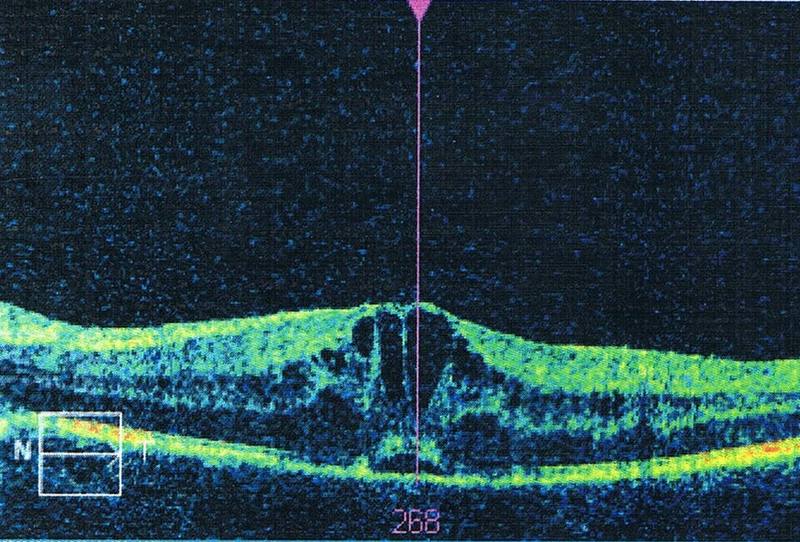
Key points - Preoperative risk factors include small pupils, pseudoexfoliation, advanced age and poor positioning [S10]; tamsulosin carries an odds ratio of 31.06 for intraoperative floppy-iris syndrome (IFIS) [S7]; previous intravitreal injections double the odds of PCR [S6]. - PCR, intraoperative complications, clear corneal incisions and absence of intracameral antibiotics are strongly associated with acute endophthalmitis [S1]; guidelines agree on intracameral antibiotic prophylaxis [S11]. - CME is the most common cause of visual impairment after cataract surgery; acute CME often resolves spontaneously, and evidence for NSAID treatment is very uncertain [S8]. - Pseudoexfoliation raises the odds of IOL dislocation about six-fold (OR 6.02) [S3]. - After uneventful surgery in non-glaucomatous patients, the routine first-day review can be omitted if symptomatic patients can be seen as needed [S2].
Evidence last checked: 2026-10-17 (PubMed abstracts).
Red flags
- Pain, redness and falling vision in the days after surgery: acute endophthalmitis, one of the most serious complications [S1].
- Reduced vision with anterior chamber inflammation: consider a retained foreign object, particularly plastic [S9].
- Late blurring with a decentred or mobile IOL in pseudoexfoliation: IOL dislocation [S3].
- Unexpected IFIS in a man on tamsulosin: can turn routine surgery into significant visual morbidity [S7].
Recognise it: who is at risk
| Risk factor | Complication | Effect size |
|---|---|---|
| Tamsulosin | IFIS | OR 31.06 [S7] |
| Antipsychotics, finasteride, benzodiazepines | IFIS | OR 6.91, 4.60, 2.88 [S7] |
| Male sex, hypertension | IFIS | OR 4.25, 1.55 [S7] |
| Previous intravitreal injection | PCR | OR 2.01; OR 1.03 per extra injection [S6] |
| Pseudoexfoliation | IOL dislocation | OR 6.02 [S3] |
| Diabetes, DSAEK/DSEK, vitrectomy, glaucoma, hypertension | IOL opacification, mainly hydrophilic IOLs | case series data [S5] |
- Smaller preoperative dilated pupils predispose to IFIS [S7].
- Risk stratification models mostly predict zonular complications and PCR in phacoemulsification; common predictors are poor positioning, advanced age, small pupils and pseudoexfoliation. The models lack external validation [S10].
Confirm it
- Retained foreign objects (metal, fibre, plastic) were usually detected during surgery or at slit-lamp examination; plastic objects usually caused symptoms [S9].
- IOL opacification appeared at a mean of 14.93 months after surgery and is linked to calcium or phosphate deposits [S5].
- Acute CME is defined as lasting less than four months; CME persisting four months or longer is chronic [S8].
Manage it
Before acting on this section, check the national and local guidelines, product information and regulatory approvals that apply where you practise. See the medical disclaimer.
Tier A (primary care / no specialist)
- Ask about tamsulosin and other alpha-blockers, antipsychotics, benzodiazepines, finasteride and previous intravitreal injections, and record them in the referral [S6] [S7].
- Make sure every patient knows how to return quickly if pain or worsening vision develops; deferring routine review is only safe when symptomatic patients can be seen [S2].
Tier B (general eye clinic)
- Plan high-risk cases. Use a full preoperative risk assessment to stratify surgical risk [S7] [S10], and discuss PCR risk with patients who have had intravitreal injections [S6]. Intracameral epinephrine did not significantly prevent IFIS in the meta-analysis (OR 0.29, CI 0.08 to 1.06) [S7].
- Prevent infection. Five high-quality guidelines agree on intracameral antibiotics (cefuroxime or moxifloxacin) [S11]. Lack of intracameral cefazolin or cefuroxime (each 1 mg in 0.1 ml, as reported in [S1]) was associated with endophthalmitis [S1].
- Avoid routine preoperative medical tests for surgery under local anaesthesia: they do not reduce complications [S11].
- Follow-up. In 3 RCTs (886 patients), deferring review to 2 weeks did not change unscheduled visits or acuity; complications counted were lower partly because early transient pressure spikes were not detected [S2]. Keep first-day review for glaucoma patients and complicated surgery.
- Prevent retained objects. Inspect instruments and packs, and use fibre-free wipes, towels and gauzes [S9].
Tier C (specialist centre)
- CME treatment. A Cochrane review (2022) of 9 small trials found the effects of NSAIDs very uncertain; in chronic CME, 90 days or more of NSAID treatment may increase the likelihood of visual improvement vs placebo (RR 2.87, very low certainty) [S8]. Another systematic review found topical NSAIDs better than placebo in three RCTs and no significant differences among other strategies [S4]. Doses are not covered: follow local formularies.
- Retained objects. Location, biocompatibility and inflammation guide removal; signs resolved in most patients after removal [S9].
- IOL dislocation in pseudoexfoliation. Risk is high both early and late after surgery [S3].
Refer when
| Situation | Urgency |
|---|---|
| Pain, redness, reduced vision or hypopyon after cataract surgery | Immediate, same-day [G1] [S1] |
| Retained lens fragment or object, or persistent anterior chamber inflammation | Urgent; timing per your local service or specialist advice [S9] |
| Decentred or dislocated IOL | Urgent to a specialist centre; timing per your local service or specialist advice [S3] |
| Vision reduced weeks after surgery with suspected CME | Urgent to an eye clinic with OCT; timing per your local service or specialist advice [S8] |
Pitfalls
- Missing the drug history: tamsulosin, finasteride, antipsychotics and benzodiazepines all predispose to IFIS [S7].
- Ignoring previous intravitreal injections when consenting for surgery [S6].
- Assuming risk calculators are validated: most are not [S10].
- Omitting next-day review in glaucoma patients; the RCT evidence for deferral excluded them [S2].
- Treating acute CME aggressively without evidence; acute CME often resolves spontaneously [S8].
Evidence notes
| Source | Date | Design |
|---|---|---|
| [S1] | 2013 | Meta-analysis of 42 observational studies |
| [S2] | 2015 | Meta-analysis of 3 RCTs |
| [S3] | 2017 | Meta-analysis of 14 cohort and case-control studies |
| [S4] | 2017 | Systematic review of 10 RCTs |
| [S5] | 2020 | Systematic review of 39 case series and retrospective studies |
| [S6] | 2022 | Meta-analysis of 6 cohort studies |
| [S7] | 2022 | Meta-analysis of 38 studies |
| [S8] | 2022 | Cochrane systematic review, 9 RCTs |
| [S9] | 2024 | Systematic review of 28 studies |
| [S10] | 2025 | Systematic review of 8 risk models |
| [S11] | 2025 | Systematic review of 5 clinical guidelines |
- Most risk factor data are observational [S1] [S3] [S5] [S6] [S7].
- CME treatment trials are small and mostly at high risk of bias [S8].
- Endophthalmitis is covered in more detail in the post-operative endophthalmitis article.
- Not covered by these sources: management of PCR and vitreous loss, suprachoroidal haemorrhage, corneal decompensation, refractive surprise, and toxic anterior segment syndrome.
Related articles
References
See the numbered source list below. Each marker [S#] links to its PubMed and DOI record.
Sources
- [S1] Cao H, Zhang L, Li L, Lo S Risk factors for acute endophthalmitis following cataract surgery: a systematic review and meta-analysis. PloS one. (2013). PubMed 23990980 · doi:10.1371/journal.pone.0071731
- [S2] Kessel L, Andresen J, Erngaard D, Flesner P, Tendal B, Hjortdal J Safety of deferring review after uneventful cataract surgery until 2 weeks postoperatively. Journal of cataract and refractive surgery. (2015). PubMed 26796457 · doi:10.1016/j.jcrs.2015.11.010
- [S3] Vazquez-Ferreiro P, Carrera-Hueso FJ, Fikri-Benbrahim N, Barreiro-Rodriguez L, Diaz-Rey M, Ramón Barrios MA Intraocular lens dislocation in pseudoexfoliation: a systematic review and meta-analysis. Acta ophthalmologica. (2017). PubMed 27569700 · doi:10.1111/aos.13234
- [S4] Wielders LH, Schouten JS, Aberle MR, Lambermont VA, van den Biggelaar FJ, Winkens B, et al. Treatment of cystoid macular edema after cataract surgery. Journal of cataract and refractive surgery. (2017). PubMed 28366377 · doi:10.1016/j.jcrs.2016.06.041
- [S5] Fernández J, Sánchez-García A, Rodríguez-Vallejo M, Piñero DP Systematic review of potential causes of intraocular lens opacification. Clinical & experimental ophthalmology. (2020). PubMed 31581356 · doi:10.1111/ceo.13650
- [S6] Zhong Z, He Z, Yu X, Zhang Y Intravitreal Injection Is Associated with Increased Posterior Capsule Rupture Risk during Cataract Surgery: A Meta-Analysis. Ophthalmic research. (2022). PubMed 34942626 · doi:10.1159/000521576
- [S7] Christou CD, Esagian SM, Ziakas N, Prousali E, Tzamalis A Factors predisposing to intraoperative floppy-iris syndrome: An up-to-date meta-analysis. Journal of cataract and refractive surgery. (2022). PubMed 35858619 · doi:10.1097/j.jcrs.0000000000001017
- [S8] Wingert AM, Liu SH, Lin JC, Sridhar J Non-steroidal anti-inflammatory agents for treating cystoid macular edema following cataract surgery. The Cochrane database of systematic reviews. (2022). PubMed 36520144 · doi:10.1002/14651858.cd004239.pub4
- [S9] Kang C, Wang E, Chomsky A, Greenberg PB Retained foreign objects after routine cataract surgery: a systematic review. Graefe's archive for clinical and experimental ophthalmology = Albrecht von Graefes Archiv fur klinische und experimentelle Ophthalmologie. (2024). PubMed 37962665 · doi:10.1007/s00417-023-06286-9
- [S10] Kang C, Zhu AS, Waldman O, Kashner TM, Greenberg PB Cataract surgery risk stratification models: a systematic review. Graefe's archive for clinical and experimental ophthalmology = Albrecht von Graefes Archiv fur klinische und experimentelle Ophthalmologie. (2025). PubMed 39900805 · doi:10.1007/s00417-025-06761-5
- [S11] García Anguas M, Seva-Llor AM, Cabrera Beyrouti R Cataract care process: Systematic review of clinical guidelines and synthesis of recommendations. Journal of healthcare quality research. (2025). PubMed 41027307 · doi:10.1016/j.jhqr.2025.101161
Guidelines
- [G1] NHS Scotland (Community Eyecare Guidelines, eyes.nhs.scot). 7.4 Endophthalmitis, Post-Operative, (Exogenous Endophthalmitis) (2026). https://www.eyes.nhs.scot/eyecare-guidelines/section-7-uvea/74-endophthalmitis-post-operative-exogenous-endophthalmitis/